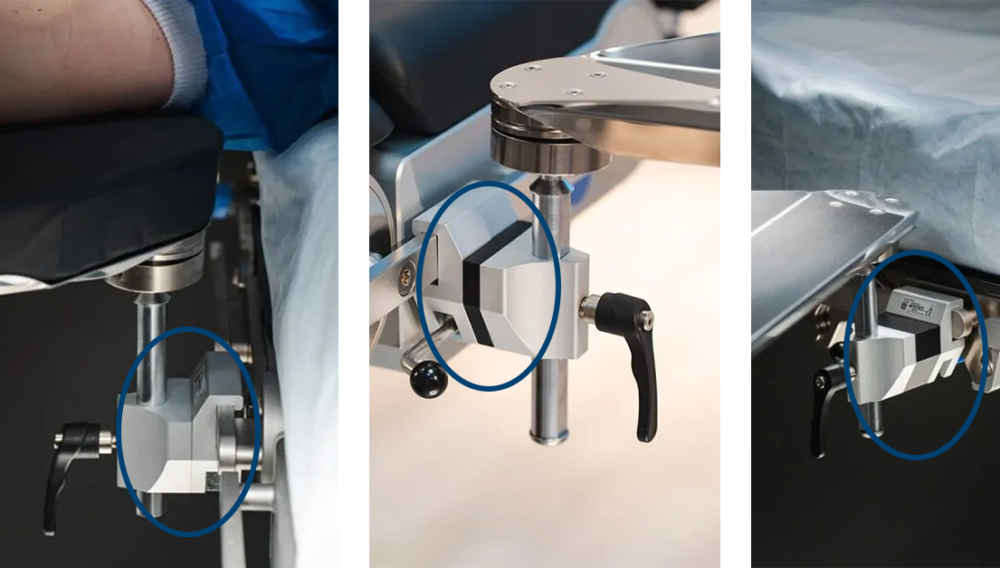
When selecting an armboard, attention is often given to its length, material, or imaging compatibility. However, one small detail can make a significant difference in daily use: the armboard spacer.
Choosing the right armboard spacer helps ensure proper positioning between the armboard and the operating table, improving both clinical access and patient support.
What Is an Armboard Spacer?
An armboard spacer creates the distance between the armboard and the operating table rail. The right spacer ensures that the armboard is positioned correctly in relation to the operating table mattress, providing both stability and easy access for the surgical team.
When to Choose an Armboard Without a Spacer
An armboard without a spacer is the best choice when you want the armboard positioned as close to the operating table as possible.
Choose no spacer when:
- The operating table has a standard or narrow mattress.
- You want to maximize access around the patient.
- Surgeons or clinicians need to work close to the operating table.
When to Choose a 10 mm Armboard Spacer
A 10 mm spacer provides additional clearance between the armboard and the operating table without significantly increasing the distance.
Choose a 10 mm spacer when:
- The operating table mattress requires a small amount of extra clearance.
- The armboard sits slightly too close to the mattress.
- You need a balance between patient support and clinical access.
When to Choose a 30 mm Armboard Spacer
A 30 mm spacer is designed for operating tables with wider mattresses where additional clearance is needed.
Choose a 30 mm spacer when:
- The operating table has a wide or thick mattress.
- There is limited space between the mattress and the armboard.
- Additional clearance is needed to achieve proper armboard positioning.
Choosing the Right Armboard Spacer
The correct armboard spacer depends on your operating table, mattress configuration, and clinical workflow.
Before making your choice, consider:
- The width and thickness of the operating table mattress.
- How close you need the armboard to be to the operating table.
- The amount of clearance required for comfortable patient positioning.
- The needs of the surgical team during the procedure.
Although small in size, the right armboard spacer can make a noticeable difference in workflow, ergonomics, and patient positioning.
Need Help Choosing the Right Armboard?
Insikter